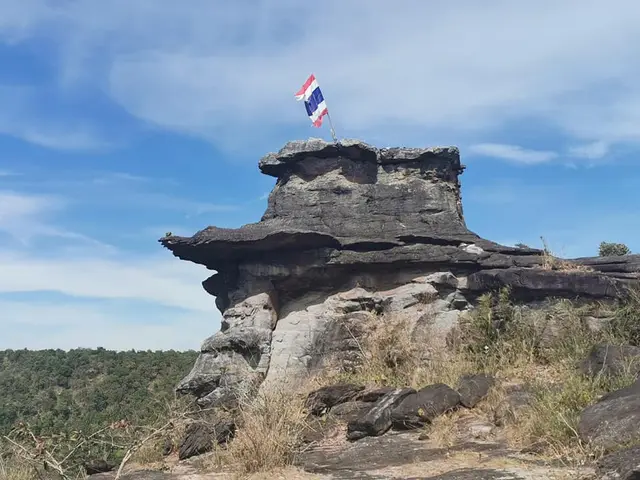
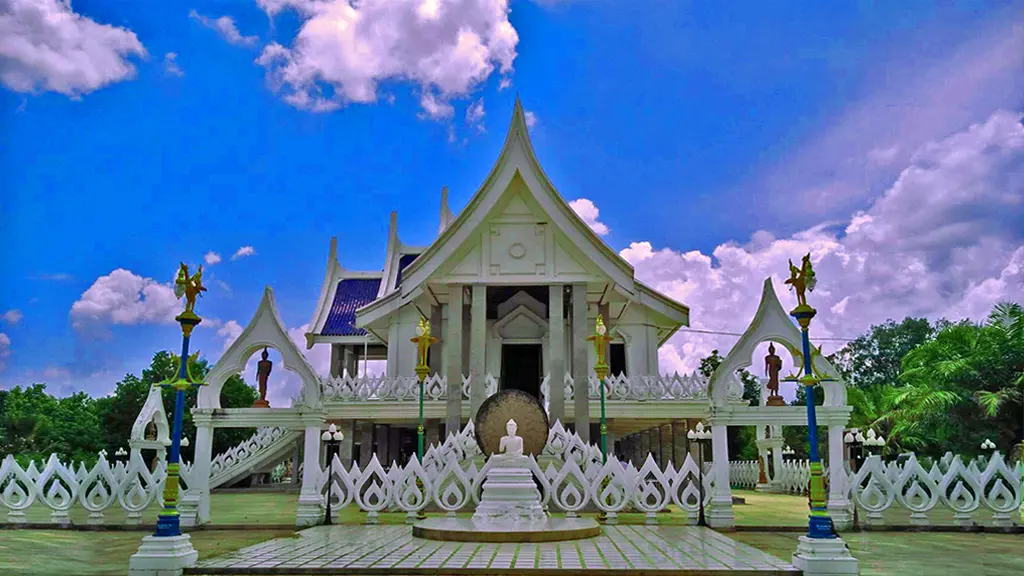
A cool-season trip to Ubon Ratchathani is your one chance each year to see the sandstone plateaus along the Mekong River turn into fields of purple, yellow and white wildflowers. The densest bloom usually falls between late October and December, after the last rains of the year. This article gathers what you should know before setting out from Bangkok or elsewhere in Thailand, from how to get to Ubon Ratchathani and around the province to what to wear and the etiquette on the rock plateaus that helps the flowers come back every year.
Why the end of the year is the best season in southern Isan
Ubon Ratchathani lies at the far eastern tip of the country and is one of the first provinces to feel the cold winds from the north. From November to February the skies are usually clear and humidity is low. Early mornings by the Mekong are cool enough for long sleeves, while the midday sun is still strong, as is typical in Isan.
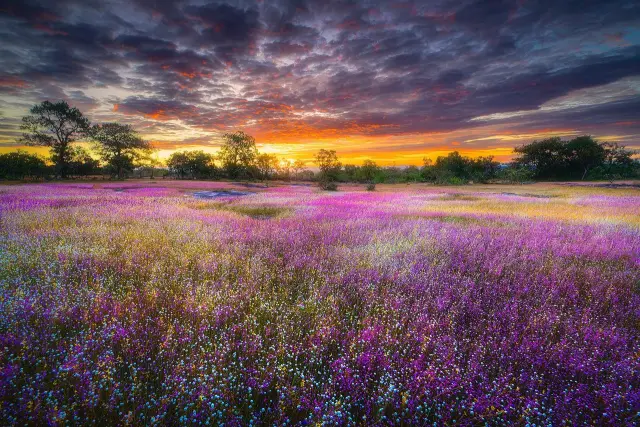
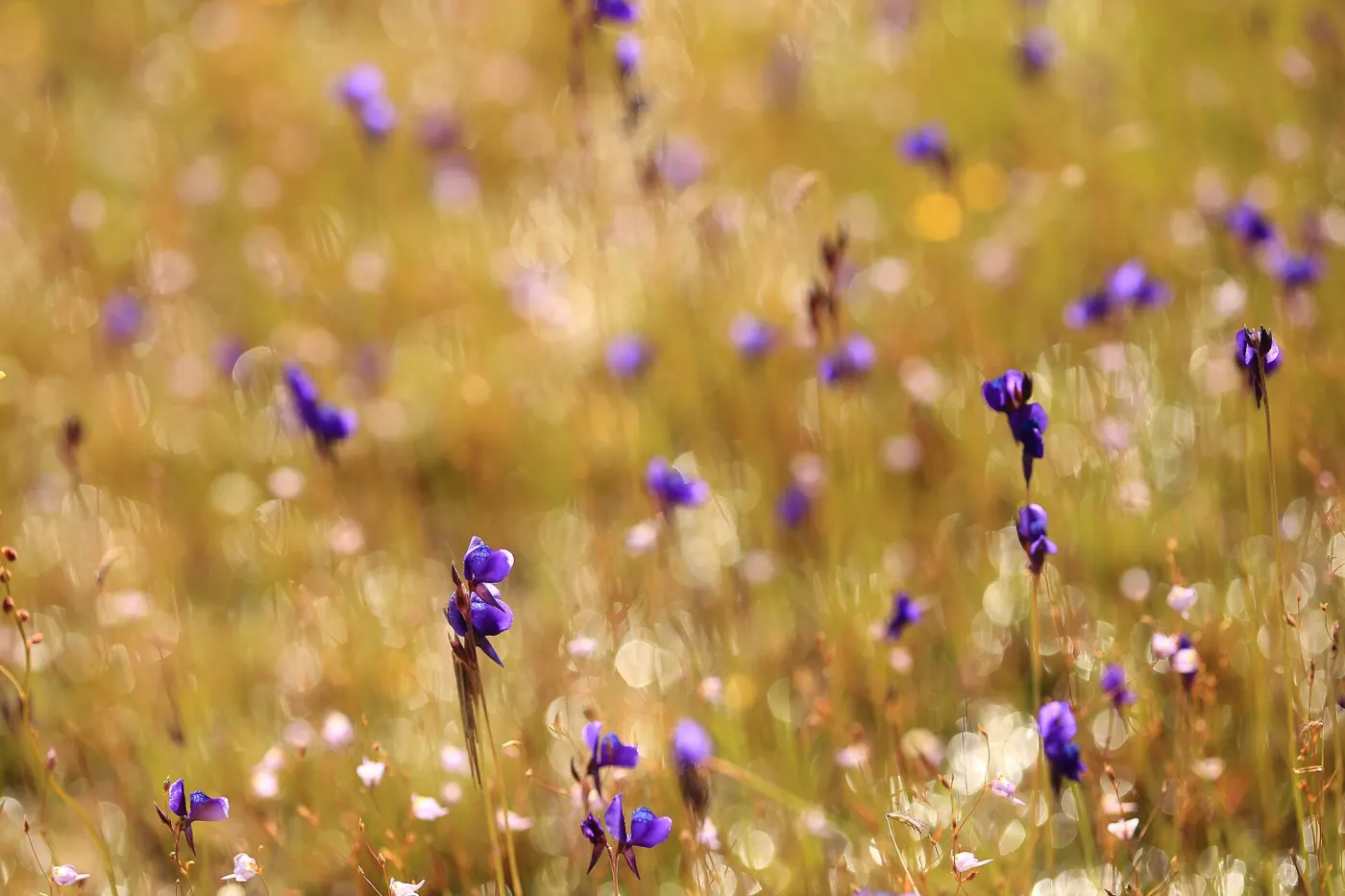
The wildflowers on the rock plateaus are tiny annual plants that live on the water trapped in rock hollows and thin sandy soil after the rains end. As the soil begins to dry, the plants rush to flower before the dry season, so the blooming period lasts only a few weeks. In years when the rains end early or late, the peak shifts accordingly, so always check the announcements of Pha Taem National Park before booking accommodation.
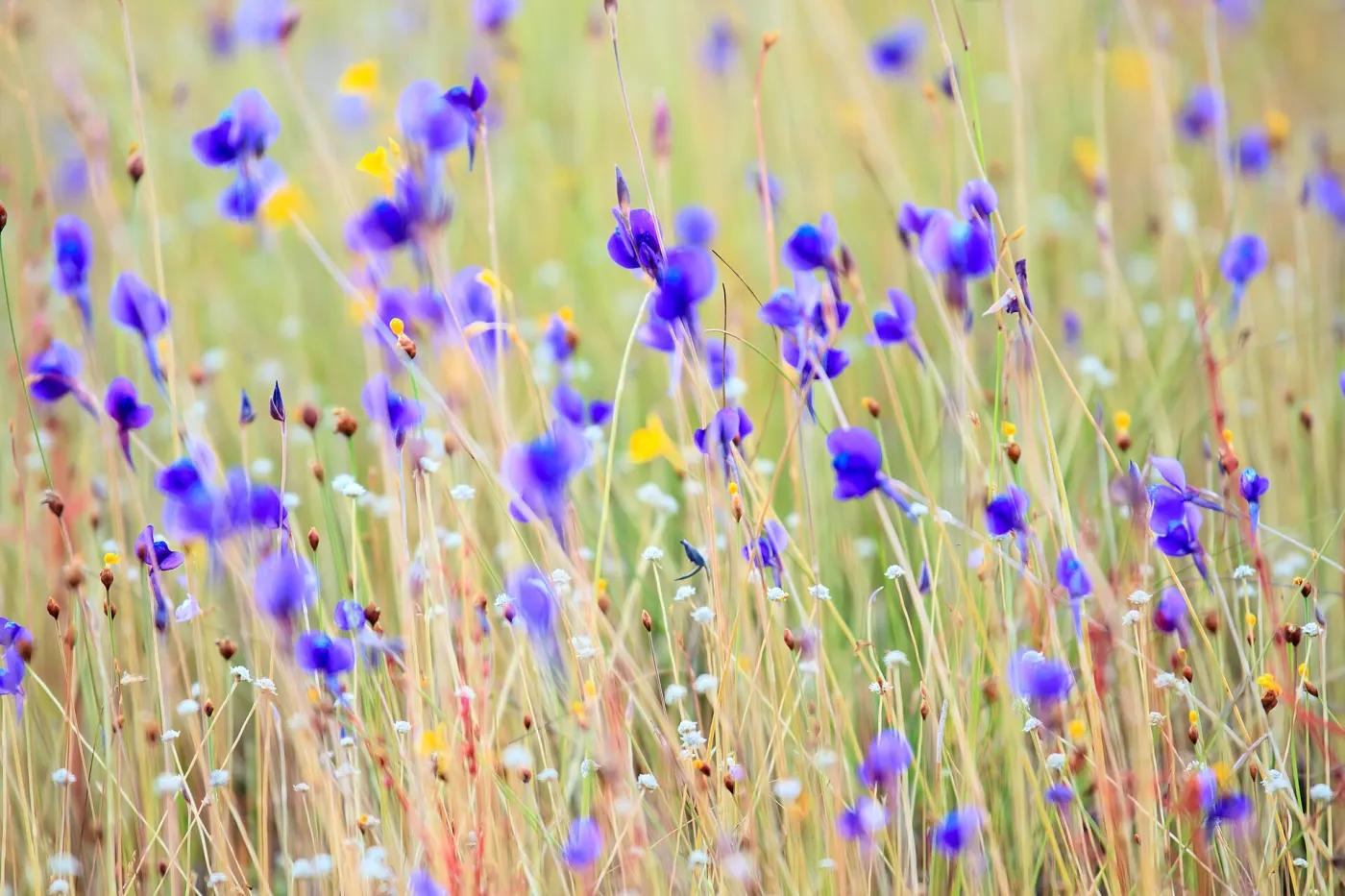
Meet the flowers you will see
- Dusita bluish-purple flowers shaped like tiny orchids, often growing in clusters where the soil is damp
- Soi Suwanna bright yellow flowers in small sprays, the main color that makes the plateau look like a golden carpet
- Manee Thewa round white flower heads like tiny pearls on long slender stems, best seen when you crouch down to ground level
- Thip Kesorn small pale purple flowers growing among the Dusita; you need to look closely to tell them apart
- Burmannia and carnivorous plants some spots have red sundews clinging to the rock, which make beautiful macro photos
Most of the flowers are no taller than the palm of your hand. For a shot of the whole field, shoot from a low angle close to the rock, but never sit or kneel on the flowers; use zoom or a macro lens instead.
Getting from Bangkok to Ubon Ratchathani
By air
The fastest option, with daily direct flights from Don Mueang and Suvarnabhumi to Ubon Ratchathani Airport, a flight of just over an hour. The airport is in town, so you can pick up your car right after landing. In the cool season and on long holidays, tickets sell out quickly, so book in advance.
By train
Northeastern line trains from Krung Thep Aphiwat Central Terminal run to Ubon Ratchathani Station (on the Warin Chamrap side). The overnight sleeper suits travelers who want to save a night's accommodation and wake up in Isan; the journey takes about the whole night.
By bus or driving yourself
Air-conditioned coaches leave Mo Chit bus terminal several times a day. If you drive yourself, the route goes via Nakhon Ratchasima, Buriram or Surin and Sisaket, a distance that takes almost the whole day, so it is best to have someone to share the driving.
Getting around the province
The flower fields are in Khong Chiam district, about an hour and a half by car from town, and Huai Luang Waterfall is in Na Chaluai district, about another two hours further south. Public transport to the flower-viewing spots is very limited, so the most convenient options are:
- Renting a car to drive yourself from the airport or in town, suitable for small groups comfortable with long-distance driving
- Hiring a car with driver, suitable for families, elderly travelers or anyone who wants to rest along the way
- During some festival periods, the park runs short shuttles from its car park; check with the park before you go
The roads in Khong Chiam are well paved, but in the early morning there may be fog and livestock crossing the road, so slow down when entering villages.
What to wear and bring
- A light jacket for the mornings and early evenings, which you can take off once the sun is up
- A hat, sunglasses and sunscreen The rock plateau reflects strong light and has almost no shade
- Shoes with grippy rubber soles Some sandstone patches have moss and are slippery when wet with dew; sandals are not recommended
- Drinking water and a few snacks Some flower-viewing spots are far from shops
- A bag to carry your trash out Everything you bring in should be taken out by you
Etiquette in the national park
The rock plateau is an ecosystem that recovers very slowly. Just a few footprints can dislodge sandy soil that has built up over a long time, and the flowers may not grow the following year. What to do when you visit:
- Walk only on the boardwalks or the paths marked by park staff
- Don't pick flowers or dig up plants to take home; collecting plants in a national park is illegal
- Don't fly a drone without first getting permission from the park
- Pay the park entrance fee at the checkpoint. Foreigners have a separate rate; check the latest rates with the Department of National Parks
- Arrive before late morning, when the light is more beautiful and there are fewer people, which helps reduce crowding on the paths
Isan food and culture to try
Once you are in Ubon Ratchathani, make time to taste the local food, such as salt-grilled Mekong fish, som tam with crab and pla ra, larb, koi and hot sticky rice. Riverside restaurants in Khong Chiam open from late morning to evening, perfect for lunch overlooking the river after seeing the flowers. In the mornings in town, there are plenty of places serving pan-fried eggs (khai krata), khanom jeen with curry sauce and old-style coffee.
People in Ubon mainly speak the Isan language, but everyone understands central Thai. Try greeting with "Sabai dee bor" (how are you?) or saying thanks with "Khob jai lai" (thank you very much), and you will always get a smile back. Dressing modestly when visiting temples, such as Wat Sirimongkhonlaram (Wat Phu Phrao) or the temples in town, is still something local people care about.
On to Huai Luang Waterfall the next day
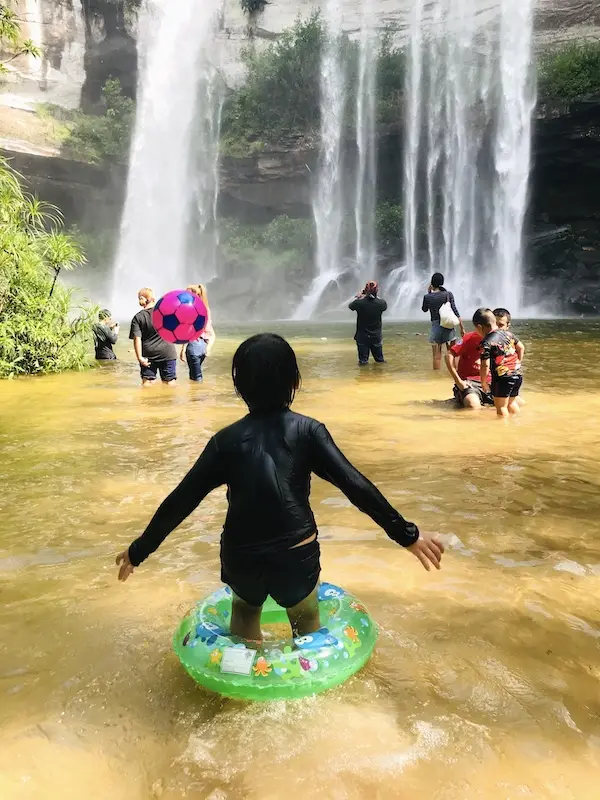
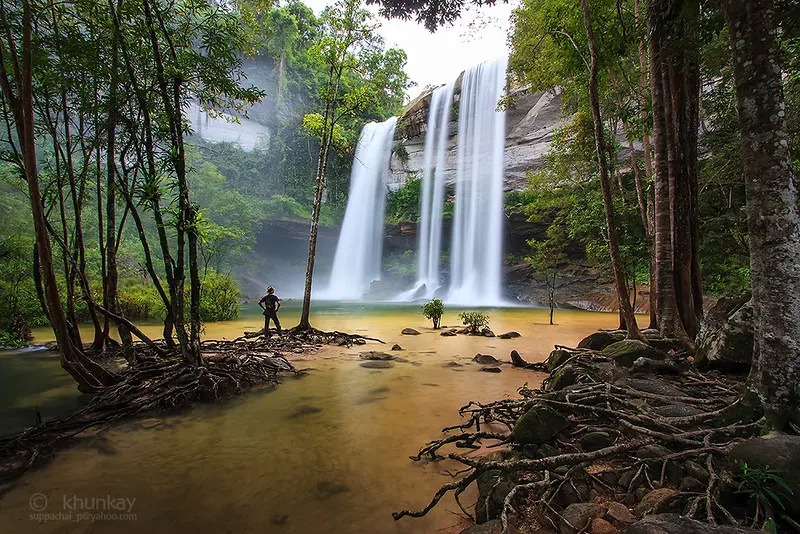
If you have another day, we recommend heading south to Phu Chong Na Yoi National Park to see Huai Luang Waterfall, known locally as Bak Tew Waterfall. The water plunges from a high cliff into a clear green pool surrounded by dense forest. At the end of the year there is still plenty of water after the rains and the weather is not hot, so walking down the stairs to the lower viewpoint is easier than in the hot season.
The way down is a long staircase, and the return is a steep climb. Travelers with knee problems or small children should allow extra time and rest along the way. The upper area has a viewpoint looking down on the falls, so you don't have to walk all the way down.
Tips to make the most of your trip
- Book a night in Khong Chiam so you can get to the flower fields early without driving from town
- Avoid long holidays if you can; on weekdays the paths are clearer and accommodation is easier to find
- Have a backup plan: if the flowers haven't bloomed yet or have already faded that year, there are still the rapids along the Mekong, the cliff with ancient rock paintings and sunrise viewpoints to visit
- Check the weather forecast before your travel day; out-of-season rain makes the rock slippery, and the park may close some trails
Would you like us to plan your trip?
If you would like to travel Ubon privately with See You Again, with airport pick-up, a car with driver, accommodation and a route from the flower fields to the waterfall, tell us your group size and preferred dates at https://seeyouagaintour.com/contact. The price depends on the number of days and the size of the vehicle, so just ask for a quote.
For a faster reply, contact us on LINE 004207289999999 or call 083 035 9755.
Read the original article about the Ubon Ratchathani flower fields at See You Again